Blog
Nobian site with Altrad
Scaffolding a 30-Metre Chimney at Nobian with 75% Fewer People
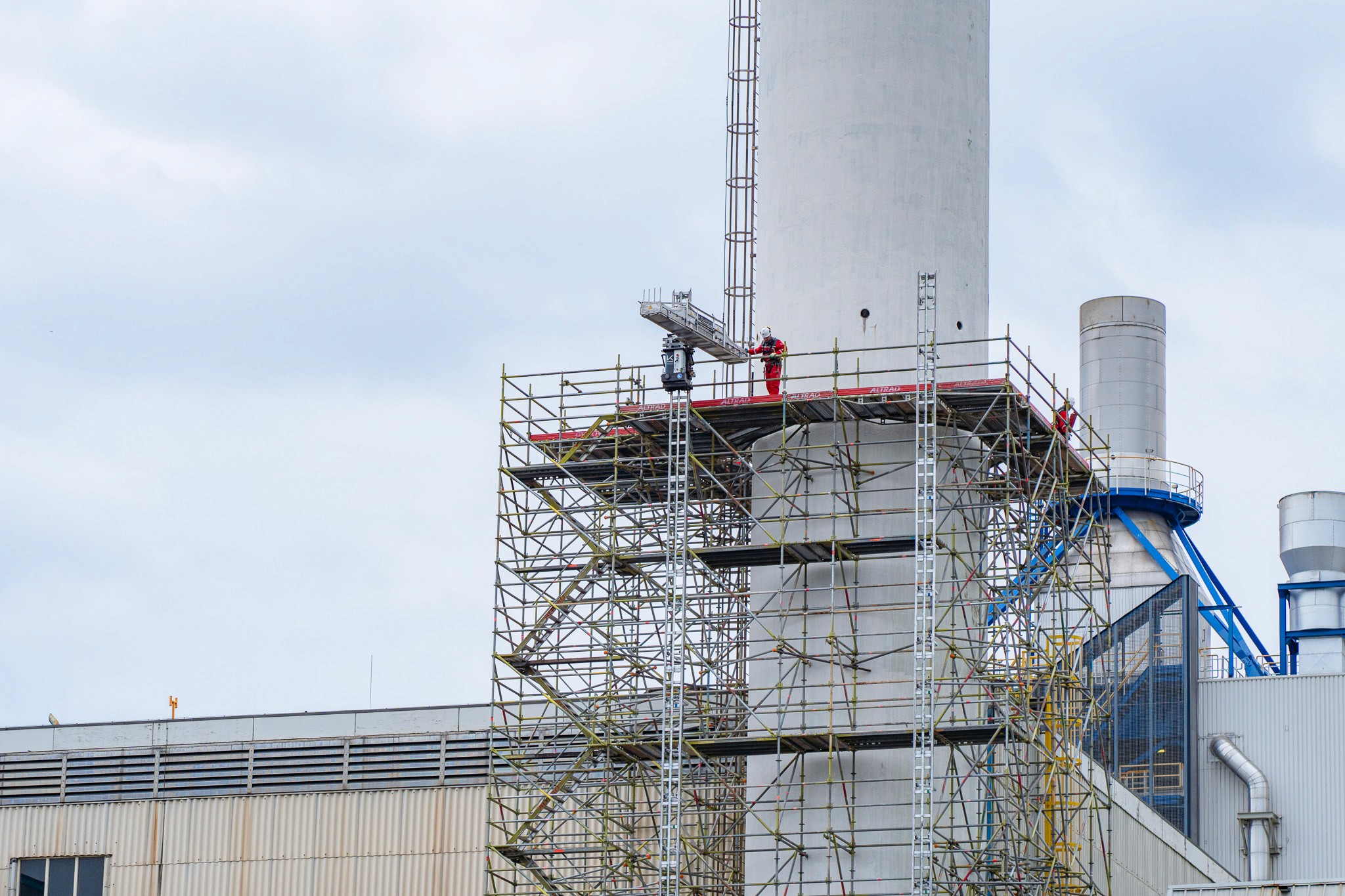
At the Nobian chemical site in the Netherlands, scaffolding a 30-metre chimney traditionally required a crew of around 20 people. With LIFTBOT, contractor Altrad completed the same scope with five. That is a 75% reduction in headcount on a single scaffolding project at a chemical plant, and a clear example of what changes when material transport is taken out of manual hands.
What makes chimney scaffolding so labour-intensive?
The height itself isn't unusual for chemical plants. What makes chimney work difficult is the material flow. On a vertical structure like this, scaffolding tubes and boards need to travel from ground level to the working platform in a continuous stream. With manual methods, that means stationing workers at multiple relay levels to pass material upward, one lift at a time. Most of the crew ends up dedicated to logistics rather than actual scaffold assembly.
This is the core inefficiency of traditional high-rise scaffolding. The scaffold builders who do the skilled work at height depend on a chain of people below them whose only role is to keep material moving. The taller the structure, the longer the chain, and the more people are needed for a task that adds no value to the build itself.
How did LIFTBOT change the setup?
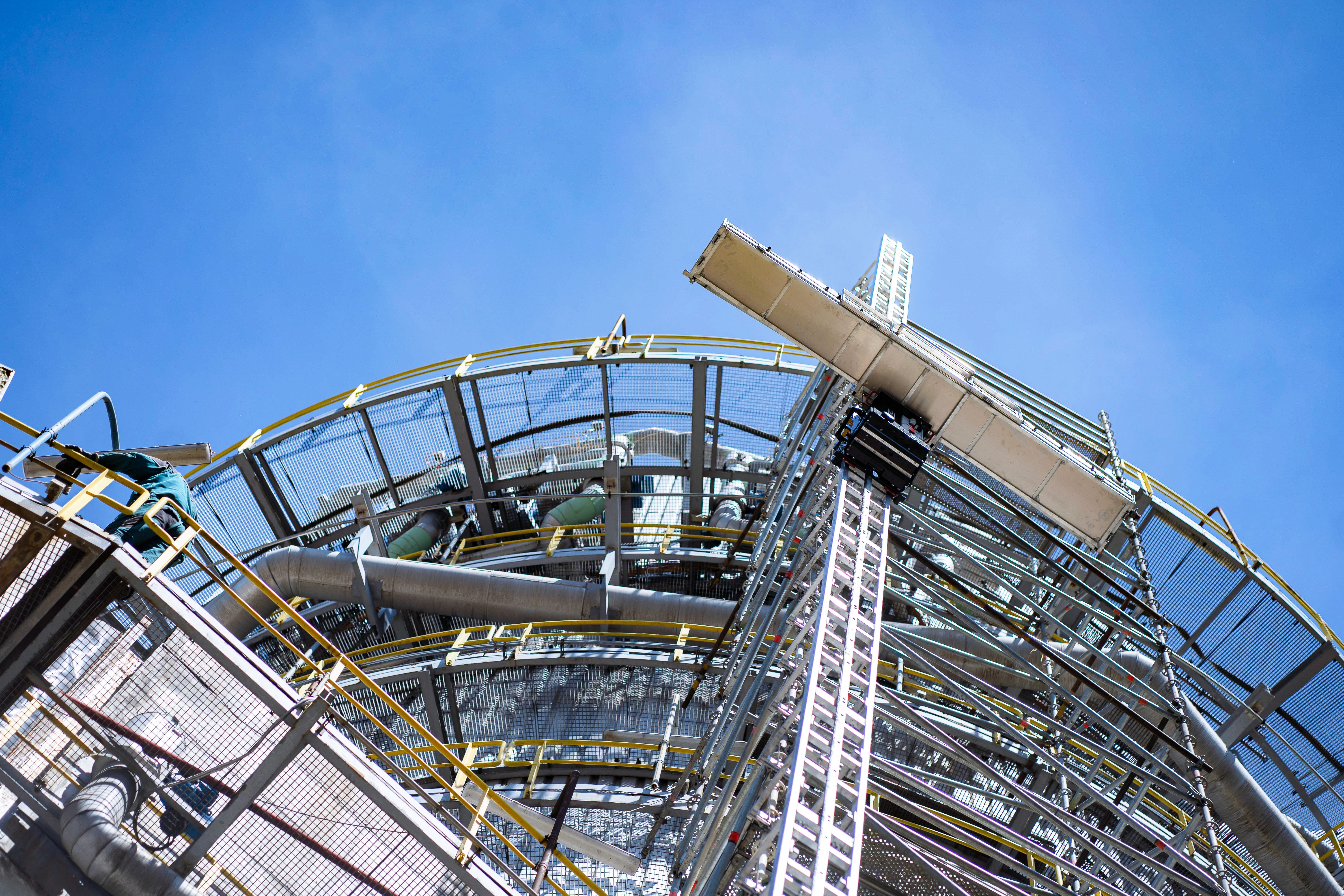
With LIFTBOT installed on the chimney, the relay chain disappeared. Material moved from ground to working height automatically, without exclusion zones and without interruptions from wind. The ground crew loaded the platform. The builders at height received it directly.
The result: five people completed the work that previously required twenty. The scaffold crew reduction came entirely from eliminating the manual relay, not from asking anyone to work faster. The builders at height worked at their normal pace. They simply never had to wait for material.
Why does this matter on a chemical site?
Chemical plants operate under strict access controls, permitting requirements, and congestion constraints. Every additional worker on site means additional safety inductions, additional PPE, and additional coordination with plant operations. Reducing the scaffold crew from 20 to 5 doesn't just save labour cost. It simplifies the entire site management picture: fewer permits, fewer people in hazardous zones, and less disruption to ongoing plant operations.
This is particularly relevant during turnarounds and maintenance windows, when multiple contractors work in close proximity and every permit slot is contested. A smaller scaffold crew means fewer interfaces with other trades and fewer coordination delays. For plant managers, it also means less exposure to the safety risks that come with large crews working at height in a process environment.
How does LIFTBOT compare to other lifting methods?
The 30-metre height sits in a range where traditional options each come with trade-offs. A crane can handle the job, but requires large exclusion zones that block other trades from working nearby. Rope-and-pulley systems work but are slow and still labour-intensive. A hoist requires space at the base that isn't always available around process equipment.
LIFTBOT fits against the structure with a compact footprint and operates on battery power, making it suitable for areas where generators or combustion engines are restricted. On a chemical site, where ATEX zones and fire permits add complexity to any equipment decision, this matters. There is no engine exhaust, no fuel storage, and no additional hot-work permitting required to operate it.
A pattern across industrial sites
Nobian is one of several chemical and refinery sites where LIFTBOT has replaced manual material handling on vertical scaffolding scopes. The scaffold crew reduction numbers vary by project height and complexity, but the direction is consistent: fewer people, same or faster completion, lower risk.
For scaffolding contractors working on industrial sites, the question is shifting. It is no longer whether automation changes the crew math on vertical scopes. It is by how much, and how quickly the contractor who adopts it gains an edge over those who don't.
About LIFTBOT
LIFTBOT is a lifting robot developed by KEWAZO. It attaches directly to the scaffold structure and transports material between ground level and the working platform, replacing the manual relay chains that traditionally drive up crew sizes on vertical builds.
The system is battery-powered, requires no external power supply, and can be set up by two people in around 20 minutes. It operates without exclusion zones, which means other trades can continue working nearby while material is being lifted. LIFTBOT is already deployed across industrial sites in Europe, including chemical plants, refineries, and power stations.
Every lift is tracked automatically through ONSITE, KEWAZO's data platform. ONSITE records material movements, cycle times, and productivity data, giving contractors and site managers a clear picture of scaffold logistics performance without manual timekeeping.
To learn how LIFTBOT fits your next scaffolding project, get in touch.