Answered by clients who already deployed it.
Trying something new isn’t easy. Change always raises questions: will it work, will the team accept the technology, is it worth it?
To help find the answers, we brought together KEWAZO clients at the Scaffold & Access Industry Association (SAIA) to discuss the questions companies usually have when they first hear about LIFTBOT.
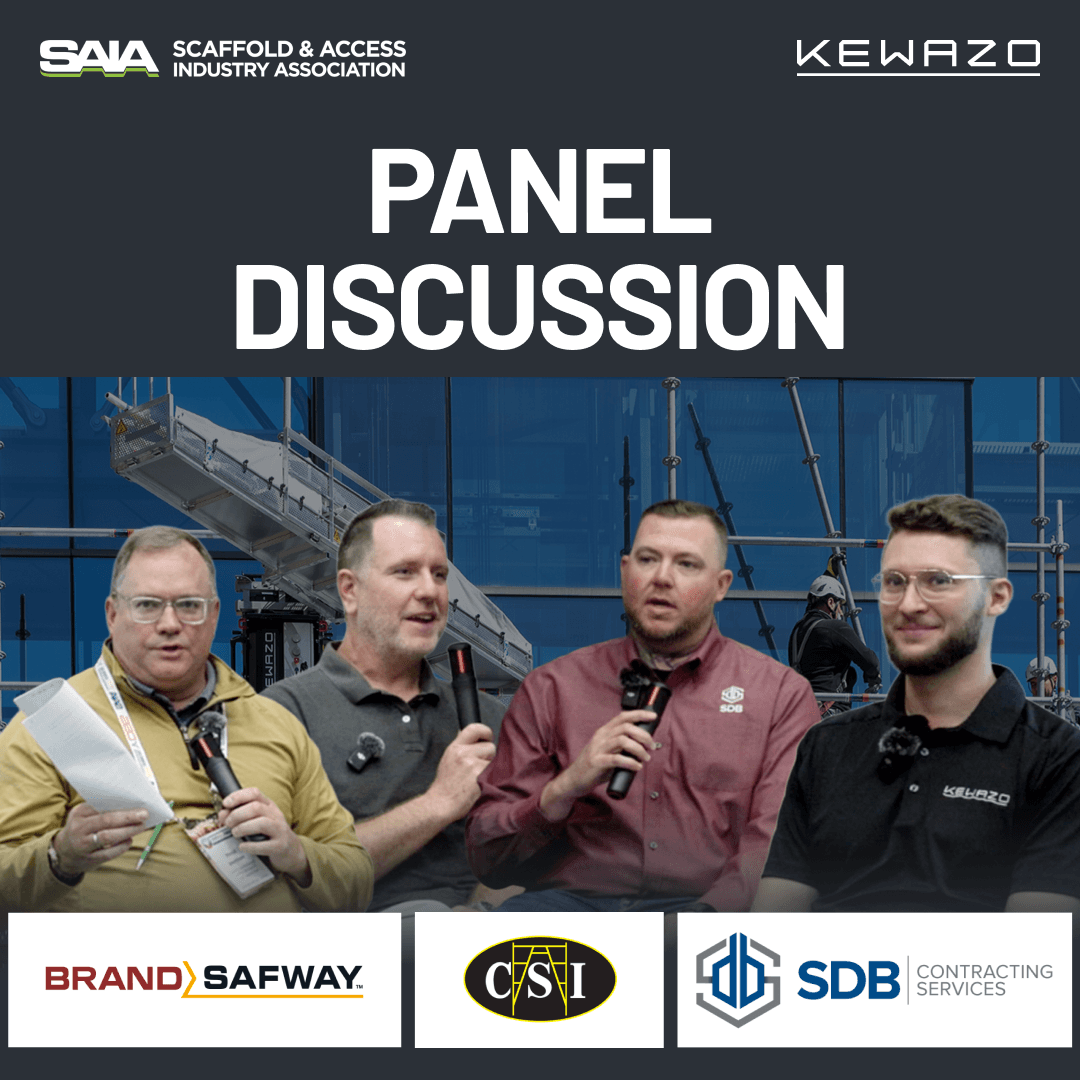
The result was a panel with Scott Holmes, PMP, BrandSafway, Matt Petersen, SDB Contracting Services, and Jeremy Trask, CSI, moderated by Heitor Gartner, KEWAZO North America President.
Watch the full 30-minute panel on our YouTube channel — link at the end of this newsletter. In this edition, we invite you to get a glimpse of the discussion through some highlights from the Q&A.
Q: Where does LIFTBOT make the biggest difference?
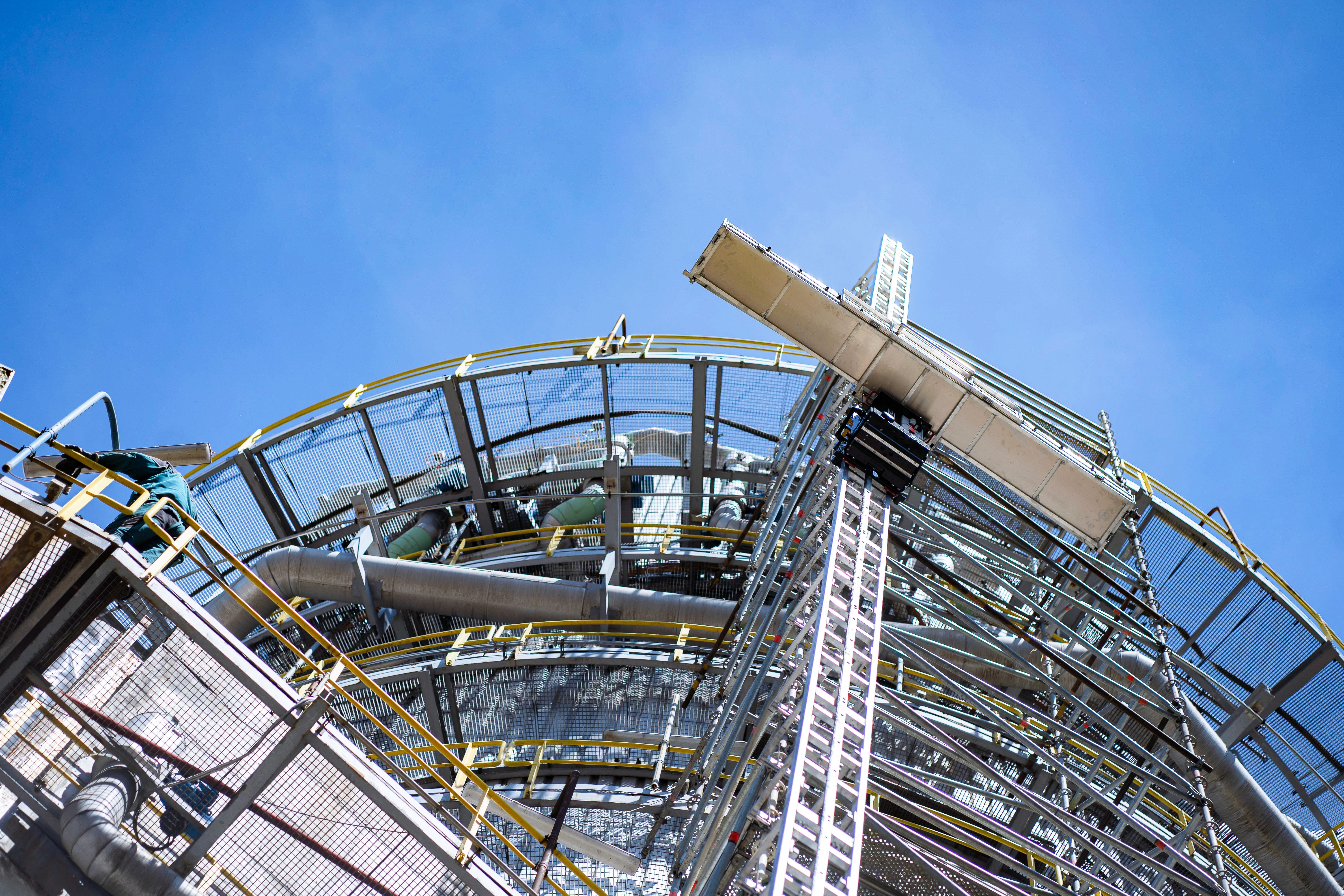
For Jeremy’s team, LIFTBOT made the biggest difference at facilities around 50–60 ft (15–18 m) and above.
“For us, we seem to find a lot more benefit on it on sites like water towers and cell towers. Once we're dealing with heights 50, 60 feet and above, we don't need a ton of lateral movement across a structure or if we do, the structure is fairly flat and easily accessible where we can set up multiple towers in a line and then kind of leapfrog those towers as we go down an elevation.
I think some might find benefits to this lift on lower heights and some of that might also work within your manpower demands, meaning if you're shorthanded across the board and you start to see needs to have conservation of labor on a particular site, then you can help backfill this equipment to support that labor force that you have."
— Jeremy Trask, General Manager, CSI
For Scott, the biggest efficiency gains come from LIFTBOT being portable and battery-powered, especially in tight areas without 220V.
“It doesn't require 220 electric. It has a small footprint. It is myself and one other person could manhandle the unit. We can put multiple masts up for setup and just move the single drive unit as we need to move it. You're going to have the ability to move that particular system in a very efficient manner and that's where the benefit comes into play.”
— Scott Holmes, VP Capital Projects, BrandSafway
Q: Did skepticism come up initially? If so, what helped move the team from doubt to adoption?
“We had a couple pilot projects that we tested this thing on because the skepticism runs high. I mean we’re in a trade craft that’s been around for hundreds of years and it’s been always done the same way so here we are trying to teach a bunch of people that are accustomed to doing things a certain way, a different way of looking at a project and that can be challenging but once you do get used to this and you can identify successfully what projects the lift is most beneficial on it starts to make a lot more sense.”
— Jeremy Trask, General Manager, CSI
We align with Jeremy’s view here: the real test is use. Try the technology in a pilot project, and let results decide. If it adds value, the team will see it. If not, they will say so. Hands-on time is the fastest way past skepticism.
Q: How well does the aluminum, LIFTBOT’s primary material, perform under tough site conditions?
The aluminum keeps the robot light enough for two-person handling, making it easy to move across the site when needed. That naturally raises a durability question, which we couldn’t leave unaddressed in the panel.
“We have them in some cleaned environments. We have them in some pretty nasty environments… we haven’t seen any wear and tear failures from the aluminum construction.”
— Scott Holmes, VP Capital Projects, BrandSafway
To hear the full discussion, including questions about lifting capacity, price, and how LIFTBOT compares to other solutions on the market, watch the complete panel recording.
If you’d like to learn more about the LIFTBOT or see it in action, we’re always happy to organize a demonstration in Houston, Munich, or directly at your site.