Blog
Brian Heater on KEWAZO: From Construction Robotics to Industrial
Brian Heater, Managing Editor at A3 (the Association for Advancing Automation) and former Hardware Editor at TechCrunch, published an article about KEWAZO's strategic shift from construction to industrial robotics. The piece is based on a conversation with CEO Artem Kuchukov and covers why industrial plants are adopting robotics faster than construction, how LIFTBOT fits into that shift, and what it means for heavy industry.
Who is Brian Heater
Heater spent eight years at TechCrunch covering robotics full time. He created the Actuator, a weekly newsletter that tracked funding rounds, product launches, and company strategy across the robotics industry. He ran TC Sessions: Robotics, where he interviewed executives from Boston Dynamics, NVIDIA, iRobot, and Agility Robotics on stage. He won two Webby Awards for his earlier work as director and host of the Engadget Show. His bylines include Wired, NPR, and The Daily Beast.
In 2025, A3, North America's largest automation trade association with over 1,400 member organizations, brought him on as Managing Editor. He now hosts the Automated podcast, a weekly long-form interview series. Recent guests include Marc Raibert (founder of Boston Dynamics), Deepu Talla (VP of Robotics and Edge AI at NVIDIA), and Peter Fankhauser (CEO of ANYbotics). The audience is robotics founders, industrial operators, investors, and engineers.
That is the context behind his decision to write about KEWAZO.
What the article covers
The article starts with a straightforward question: why would a robotics company step back from a $16 trillion market? The global construction industry was valued at $16.45 trillion in 2025, according to The Business Research Company, with projections reaching $21.73 trillion by 2030.
Kuchukov's answer comes down to market structure, not market size. Construction runs on thin margins, fragmented decision-making, and short planning horizons. Building owners do not dictate how contractors work. General contractors do not dictate how subcontractors operate. The result is a chain of disconnected stakeholders where the people closest to the work have the least capital to invest in new tools.
Industrial plants operate differently. Oil, energy, and chemical facilities have centralized operations, dedicated maintenance budgets, and operators who control purchasing decisions. They also have a direct financial incentive to reduce turnaround time and improve safety. That combination makes robotics adoption practical in a way that construction has not matched yet.
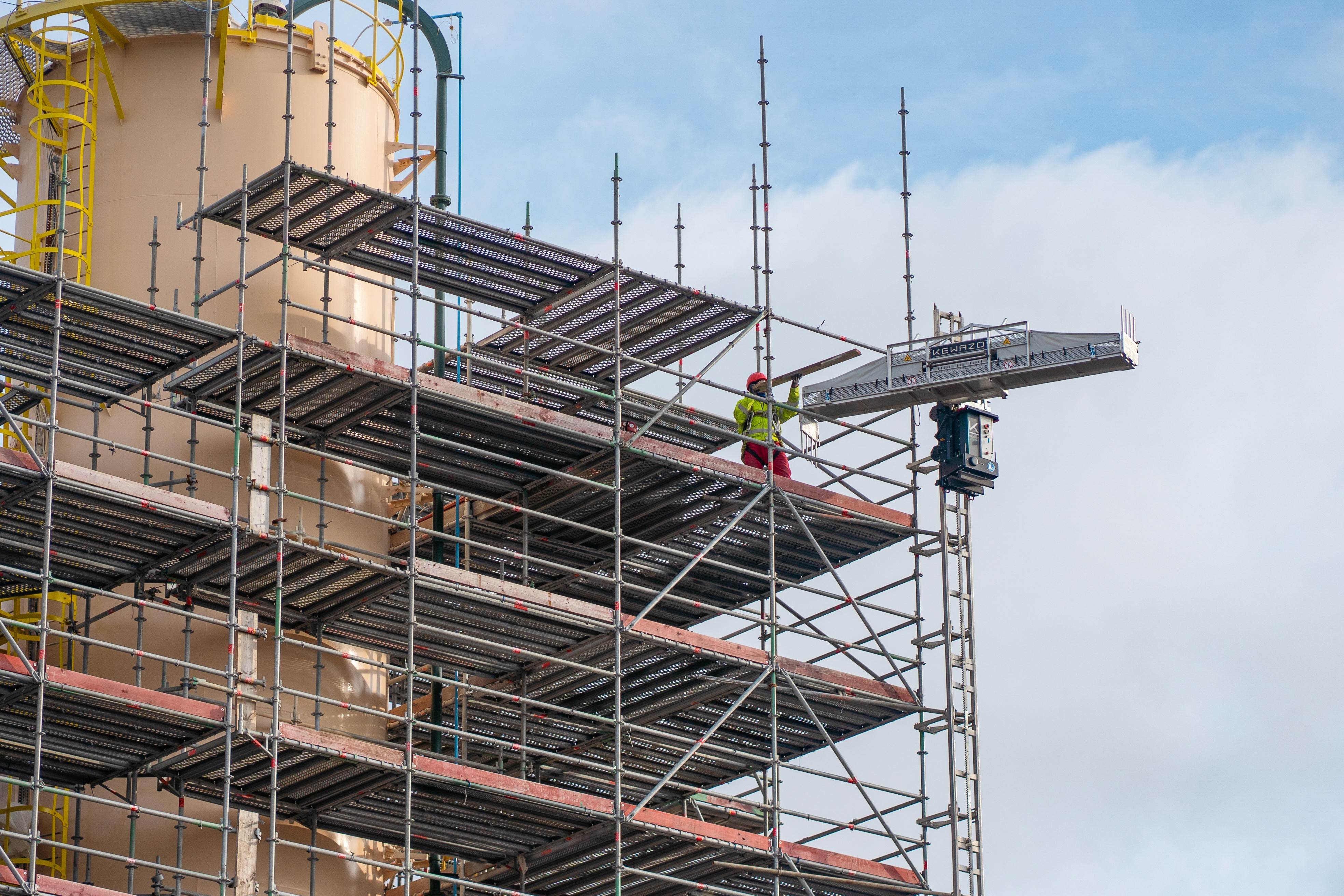
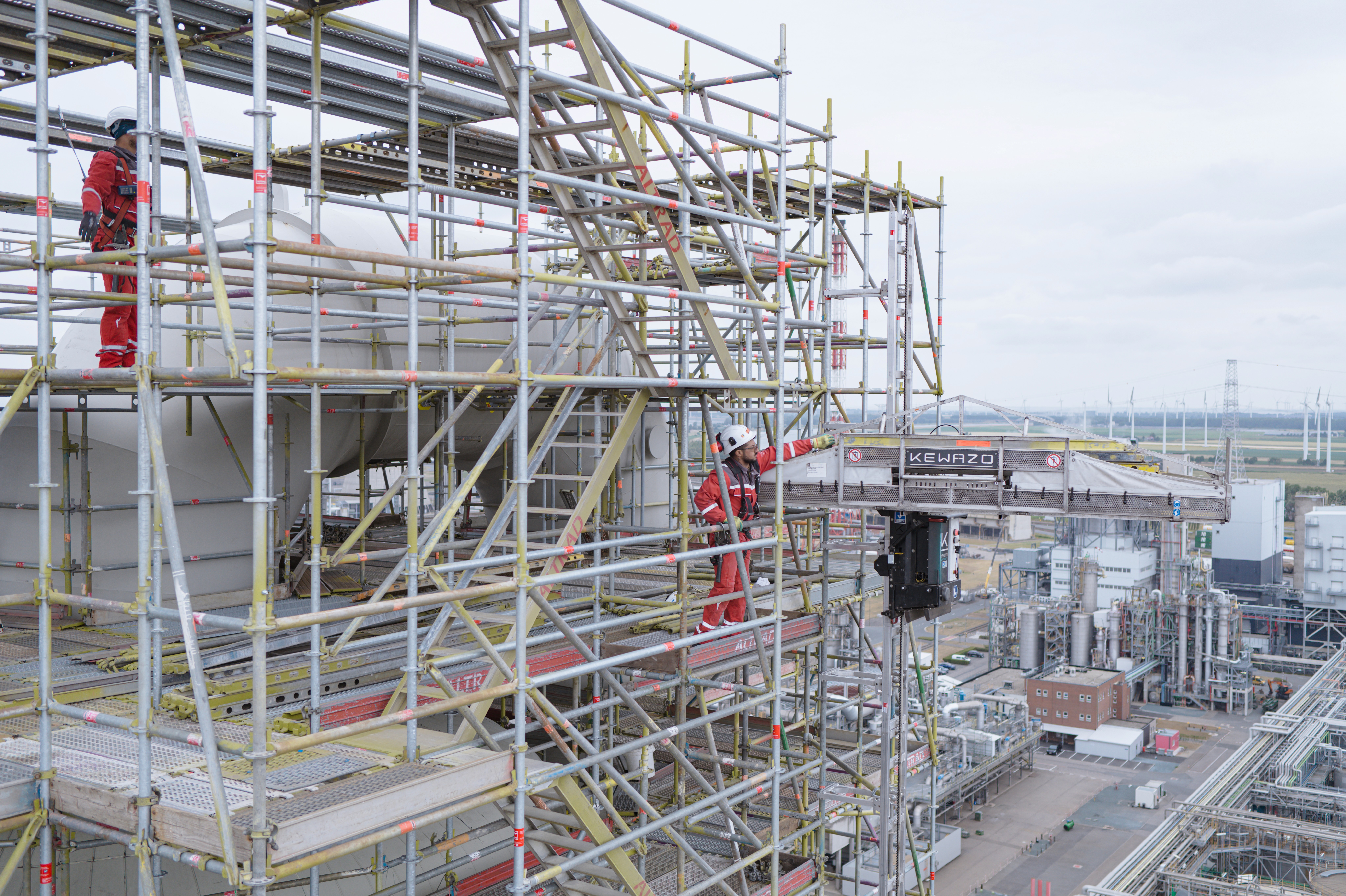
Heater covers how LIFTBOT is already deployed at facilities run by Chevron, Intel, and Dow. He also looks at the data side, specifically ONSITE, which tracks material flow across a site in real time, giving operators visibility into what is being moved, when, and where. For turnaround managers working against a daily burn rate, that information has direct cost impact.
The article closes with KEWAZO's broader ambition: to become the default robotics provider for heavy industry, whether through direct deployment, partnerships, white-labeling, or acquisitions. The recent $16 million funding round supports that direction.
Why this coverage matters for the industry
Heater's audience reads his work because he covers the companies and technologies that are actually gaining ground in robotics. His track record at TechCrunch and his current role at A3 put him in front of the people who make adoption decisions at industrial scale: plant managers, turnaround directors, EPC contractors, and the investors funding them.
The fact that he chose to cover KEWAZO signals something specific. Industrial robotics is expanding beyond automotive and warehouse logistics into sectors like oil and gas, chemicals, and energy. Companies in these sectors are looking for solutions that reduce crew sizes, improve safety, and provide operational data. LIFTBOT and ONSITE address all three.
Heater's article is not a product review. It is an analysis of why a robotics company made a strategic bet on industrial over construction, and why the structural differences between these two markets explain where robotics will scale first.
Read the full article
"Vertical Integration: KEWAZO's Journey From Construction to Industrial" is available on LinkedIn.
Related reading
Talk with Colin Xander, INEOS Styrolution, on turnaround management
Chevron Technology Ventures and Asahi Kasei invest in KEWAZO
Want to see how LIFTBOT and ONSITE work on your site? Get in touch.