Blog
Seven Countries Pump Half the World's Oil. Here's Where Their Barrels Go
The world produces roughly 80 million barrels of crude oil every day. More than half of that comes out of seven countries. The other 190 oil-producing nations split what's left.
For an industry that touches every refinery, every turnaround, and every shutdown on the planet, the 2025 map is worth knowing in detail. Here's where the barrels come from, and a fact about each producer that doesn't usually make the news.
The United States is producing more than any country has, ever
The U.S. pumps 13.58 million barrels a day, almost entirely from shale formations in Texas, North Dakota, and New Mexico (EIA International Energy Statistics). That's the highest sustained crude output any country has ever recorded.
The shift is recent. In 2008, the U.S. was importing roughly two-thirds of its oil. Ten years later, it became the largest producer in the world. Between 2014 and 2019, U.S. crude oil production grew from 8.7 to 12.2 million barrels a day, with tight-oil drilling driving roughly 80% of that growth. That is essentially the equivalent of bringing a second Canada online in five years.
Russia ships almost everything through a shadow fleet now
Russia produces 9.87 million barrels a day, mostly from Western Siberia and the Volga-Urals region (EIA Russia Country Analysis 2025). Sanctions did not stop that flow. They changed who carries it.
In January 2026, only 24% of Russia's crude exports moved on tankers from G7 and allied countries. The other 68% travelled on what analysts call a shadow fleet, a network of sanctioned vessels with anonymous ownership, frequent flag changes, and disabled tracking. Most of those barrels now go to India and China instead of Europe.
Saudi Arabia's spare capacity sits inside one giant field
At 9.51 million barrels a day, Saudi Arabia is the world's third producer, and the only OPEC+ member with meaningful spare capacity. Most of that capacity comes from a single field: Ghawar.
Ghawar stretches 280 kilometres by 30 kilometres, roughly the distance from Munich to Stuttgart. It was discovered in 1948, and it is still by far the largest conventional oil field ever found. Saudi Aramco quietly disclosed in its 2019 bond prospectus that Ghawar can sustain about 3.8 million barrels a day on its own. That is one field producing more than the entire crude output of Canada, 77 years after it was discovered.
Canada's oil is melted out of sand
Canadian production sits at 4.94 million barrels a day, mostly from the Alberta oil sands. The crude there isn't pumped from wells. It is melted out of sand using steam and heat.
The energy math is brutal. A conventional oil field worldwide returns about 17 barrels for every barrel of energy spent producing it. The oil sands return four. That ratio only makes sense when prices stay high and the reserves are large enough. Alberta's are: 158 billion barrels and counting.
Iraq pumps more oil today than at any point before 2003
Iraq produces 4.39 million barrels a day, almost all from two giant southern fields: Rumaila and West Qurna. Both are operated today by international majors under long-term service contracts.
Rumaila, the country's flagship, was on fire when the 2003 invasion began. Retreating forces ignited a series of wells. Production resumed within a month. Twenty-three years later, the same field is one of the reasons Iraq is the fifth-largest oil producer on the planet.
China is on both sides of the market
China pumps 4.34 million barrels a day, more than any European country, and is still the world's largest oil importer. Its refineries process more than 14 million barrels a day, roughly three times what the country produces.
Domestically, the old giant Daqing field used to symbolise Chinese industrial ambition, responsible for 43% of national output in 1995. By 2024, that share had fallen to 16%. China has kept production rising only by pushing into shale and unconventional drilling.
Iran ranks seventh, but the bigger number is in the ground
Iran sits at 4.19 million barrels a day, ahead of the UAE and Kuwait. The bigger number is what's underneath.
Iran's proven reserves are roughly 209 billion barrels, about 12% of all the oil left on Earth, and more than the United States and China combined. Only about 1.7 million of those daily 4.2 million barrels move through regular channels. The rest travel on a sanctioned shadow fleet of tankers, transponders off, switching flags at sea that the U.S. Treasury has spent the past year systematically targeting. Most ends up in China, Syria, and Venezuela.
Why this map matters for anyone running a refinery
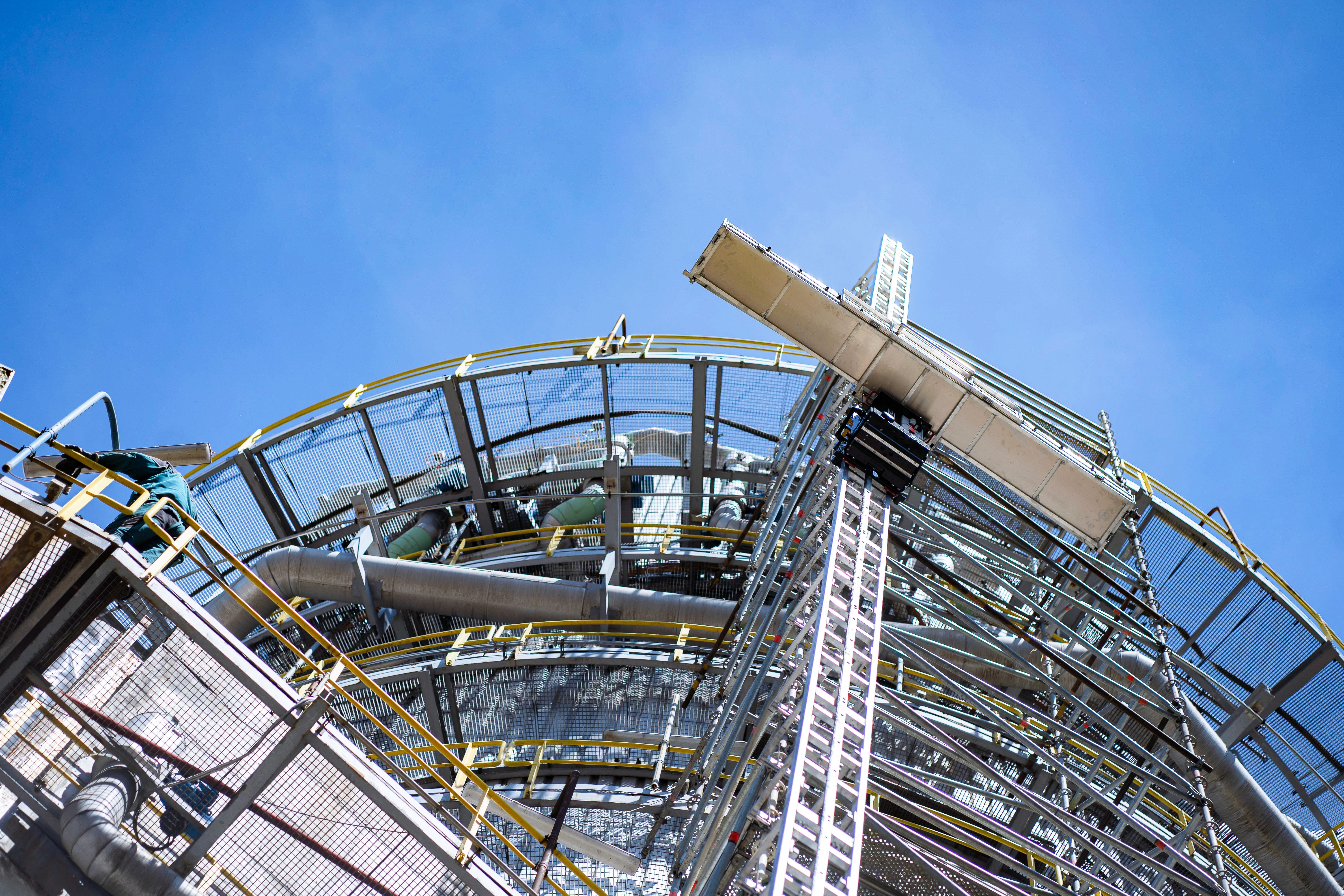
Every barrel on the list above ends up in the same place: a refinery. And refineries are where the work that KEWAZO supports actually happens. Scaffolding for tower overhauls. Material movement during planned shutdowns. The thousands of crew-hours that go into a turnaround between the moment a unit comes offline and the moment it restarts.
The countries change. The basins change. Sanctions and shadow fleets and reserve estimates change. What does not change is that the refining infrastructure handling those barrels needs to be maintained, and that maintenance happens during turnarounds.
That's where LIFTBOT works, on real industrial sites across North America and Europe, replacing cranes and reducing the manual handling that slows scaffold builds on tight turnaround schedules. See what that looks like on the BASF Ludwigshafen site, where a 30% reduction in man-hours came from replacing a crane on a scaffold disassembly. Or meet the team in person at the Shutdowns Turnarounds Superconference in Houston, May 6-7.
For the broader view of where LIFTBOT is deployed across industrial sites, the case-study landing page is here. To talk to someone directly, request a quote or a demo.