When MR Scaffolding took on a 72-metre tower in the heart of the City of London, the project came with a challenge that shaped every decision from the ground up: a 6mm fixing restriction that made conventional scaffolding methods impossible.
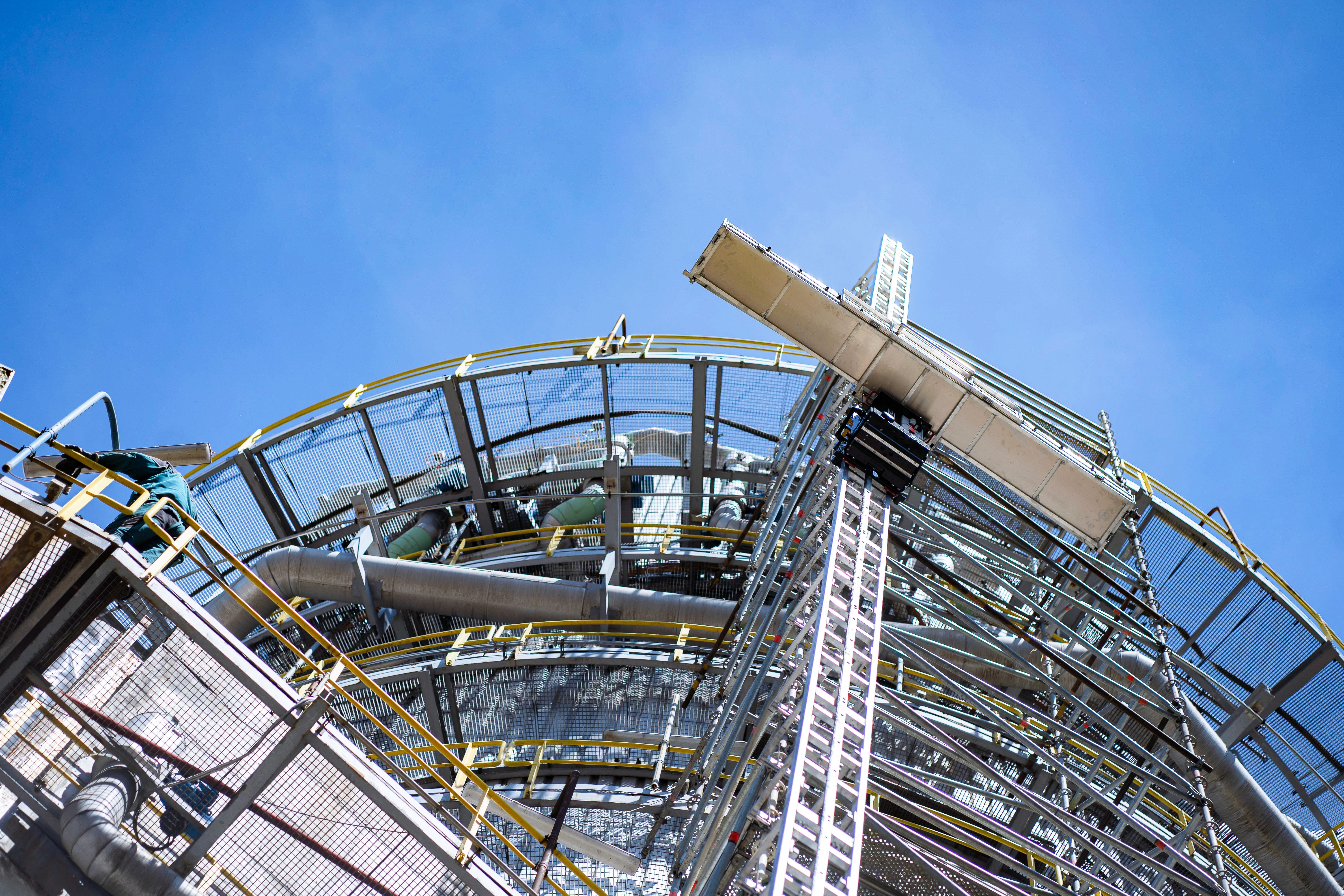
The building a fully operational commercial tower requiring cladding remediation across all four elevations demanded a completely new engineering approach. And within that approach, reducing manual handling risk at height became one of the team's most critical priorities. That's where LIFTBOT came in.
A First for MR Scaffolding
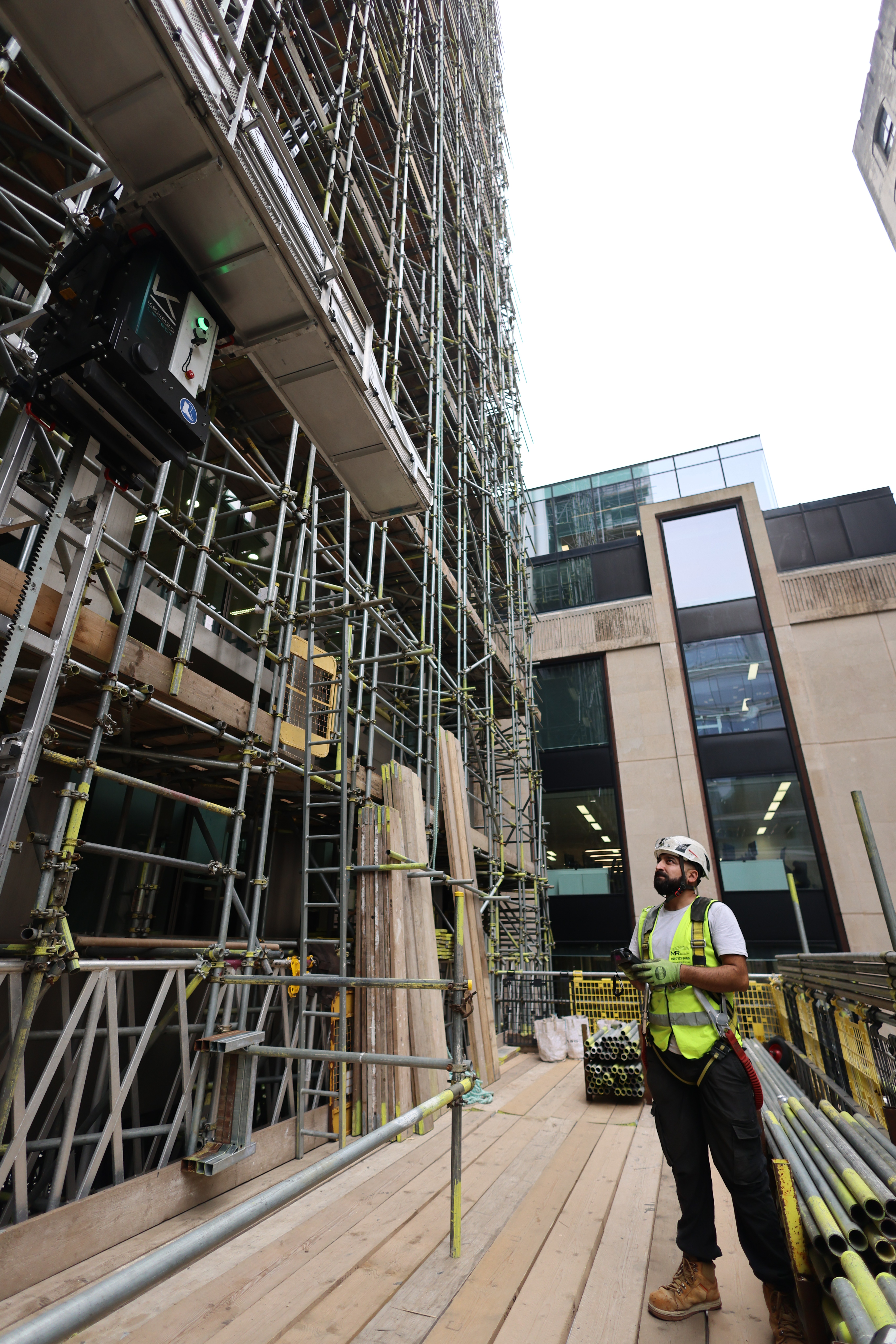
This was MR Scaffolding's first deployment of LIFTBOT, and the site conditions made it a meaningful test.
At 72 metres, the scaffold spanned approximately 19 lifts and was exposed to significant wind loading. The building remained fully operational throughout the works, with public walkways, neighbouring occupiers, and London's busiest surrounding access routes all live at ground level. Getting materials safely to height efficiently, and without putting operatives at risk wasn't optional. It was the whole challenge.
"This is our biggest project to date, height-wise. The reason for bringing in the LIFTBOT was to have less manual handling on the job. It takes away the level of risk involved in transporting materials to 72 metres high." James Davies, Operations Manager, MR Scaffolding
Why LIFTBOT, and Why Here
Site logistics ruled out mains-powered hoisting at several locations. LIFTBOT's battery-powered design made it deployable where fixed infrastructure couldn't reach no mains connection, no trailing cables, no additional trip hazards.
Its compact footprint meant it could be installed in areas where materials would otherwise have been lifted manually or with gym wheels. And its rotating basket design which swings materials safely inboard rather than requiring operatives to lean out from the scaffold directly addressed one of the highest-risk moments in high-rise scaffolding work.
"Having the basket rotating into the scaffold mitigates any chances of materials falling. It provides a safer way of removing materials rather than sticking their arms and body out of the scaffold." Site operative, MR Scaffolding
The battery performance also stood out. Running all day without needing to connect to mains power gave the team flexibility during a busy, congested urban build and maintained continuity even in the event of a power outage on site.
The Reaction on Site
As with any new tool, there was initial scepticism. That's normal, and the MR Scaffolding team were candid about it.
But once operatives moved from installation to active use, the picture changed quickly.
"Everybody's sceptical because it's something new. But if you have the chance to actually go from installing it to using it, you can see the big picture. It's easy to install and easy to use. You save lots of time."
"You can definitely take up more scaffolding with the LIFTBOT than a rope wheel."
"My impression of the LIFTBOT is: anything that can make our job easier is good. Only positives, really. If a LIFTBOT is at the next project, I'll be very happy."
The Broader Context
The project later recognised with a City of London Gold Award highlights something MR Scaffolding's Senior Contracts Manager James Davies put plainly: the challenges of high-rise remediation in dense urban environments are intensifying. Ageing structures, restricted fixing options, and live public interfaces are becoming standard conditions rather than exceptional ones.
Manual handling risks were reduced through the use of multiple mechanical hoists and LIFTBOT working in combination helping to minimise strain on operatives and reduce the risk of materials falling at height, in one of the City's most constrained and closely watched environments.
Check more in Scaffmag Issue 30 (60-63 page)
What This Project Demonstrates
LIFTBOT was designed for exactly this kind of site: complex, constrained, live, and unforgiving of error. The MR Scaffolding deployment showed that:
Battery power removes dependency on mains infrastructure, making LIFTBOT viable in logistically difficult locations
The rotating basket fundamentally changes the risk profile of material handling at height
Adoption is fast operatives moved from scepticism to active advocacy within the project
The productivity gain is real: significantly more material moved per shift compared to rope wheels, with less physical strain